Rural healthcare is facing a financial crisis. Better market intelligence can help hospitals identify opportunities to strengthen their future.
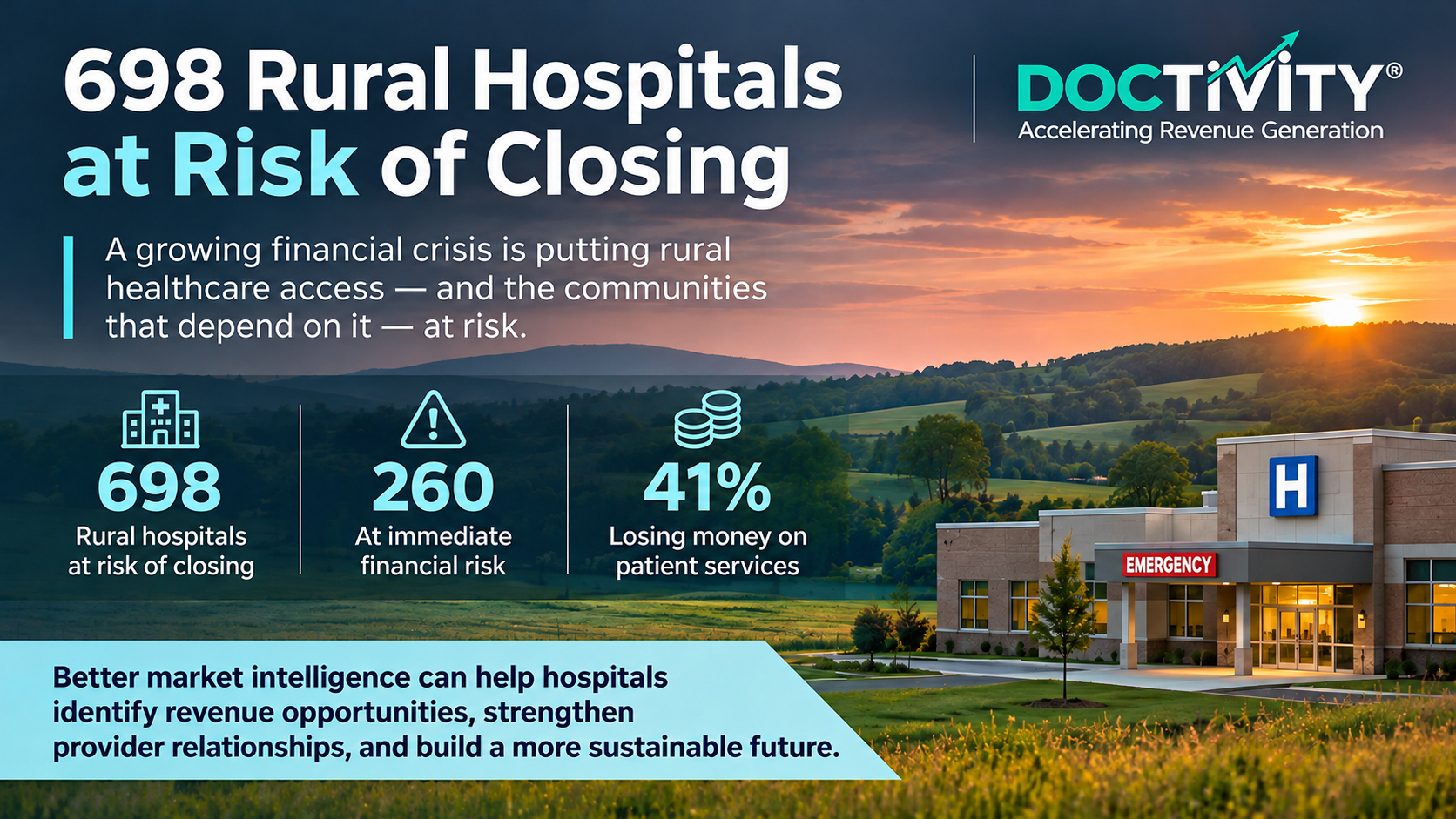
A recent Becker's Hospital Review article highlights an alarming reality: 698 rural hospitals across the United States are at risk of closing, with 260 facing immediate financial risk.
According to the Center for Healthcare Quality and Payment Reform (CHQPR), nearly one-third of America's rural hospitals face serious financial challenges.
These aren't simply numbers on a spreadsheet. They represent communities where patients could lose access to emergency services, diagnostic procedures, surgical care, and the healthcare professionals they depend on. We are talking about the creation of substantial healthcare deserts.
The consequences of losing a hospital extend far beyond healthcare. Hospitals are major employers, economic anchors, and essential community resources.
The question facing healthcare leaders is increasingly urgent: How can organizations strengthen their financial sustainability while protecting access to care?
Revenue Growth Requires More Than Increasing Patient Volume
The CHQPR analysis identifies inadequate reimbursement, particularly from private insurers, as a major contributor to rural hospitals' financial difficulties.
Payment reform is essential. No amount of patient growth can make up for reimbursement that consistently fails to cover the cost of providing care.
But alongside the reimbursement conversation, healthcare leaders must examine another critical question:
Are we fully understanding and pursuing the revenue opportunities already available within our markets?
For rural hospitals operating with limited resources, every strategic decision matters.
Investing in the wrong service line (or even the wrong aspect of a particular service line), overlooking shifts in patient demand, or missing opportunities to strengthen referral relationships can have significant financial consequences.
Healthcare organizations need more than historical performance reports. They need visibility into the broader healthcare market.
Understanding Where Patients Go and Why
Consider a rural hospital with an established orthopaedic service line.
Patients throughout its surrounding communities may be traveling to competing organizations for procedures that could potentially be provided closer to home.
Without comprehensive market intelligence, hospital leadership may not know the extent of that patient movement, which providers are connected to those patients, or whether sufficient demand exists to support additional local services.
The same questions apply to cardiology, diagnostic imaging, rehabilitation, and other essential services.
Identifying these opportunities is not about pursuing volume at any cost. It is about understanding community needs, available capacity, financial viability, and the potential to keep appropriate care closer to home.
Turning Healthcare Intelligence Into Action
At Doctivity Health, we believe healthcare organizations should have the information necessary to make confident, data-driven growth decisions.
Our platform combines national healthcare market intelligence with purpose-built Provider Relationship Management capabilities to help organizations:
- Identify service-line opportunities through market demand analysis and projected patient volumes.
- Understand patient migration and determine where patients are receiving services outside their local market.
- Strengthen referral relationships by identifying providers and understanding patterns of patient movement.
- Evaluate payer and service-line mix to support more informed growth strategies.
- Focus business development resources on opportunities with the greatest potential for meaningful results.
For rural healthcare organizations, this intelligence can help transform limited resources into more focused growth strategies.
Protecting Rural Healthcare Requires a Comprehensive Strategy
There is no simple solution to the challenges facing rural hospitals.
Sustainable reimbursement, workforce availability, operating efficiency, community partnerships, and appropriate public policy all play essential roles.
Revenue growth must also be part of the conversation.
Hospital leaders need to understand where their patients are going, which services their communities need, and how existing provider relationships can support appropriate access to care.
When healthcare organizations make more informed decisions about growth, they are better positioned to pursue financial sustainability while serving the communities that depend on them.
Rural healthcare needs sustainable solutions. Better intelligence can help identify where opportunities exist.
Read the original Becker's Hospital Review article: 698 Rural Hospitals at Risk of Closing, by State